How the Bergmann C815s Complements Larger ADTs on the Jobsite
Your big trucks are doing their job. Here's what handles everything else.
There's a moment on almost every jobsite where even the largest articulated dump trucks (ADTs) become less practical. The haul road is clear, the ADT is loaded and moving, but somewhere on site, a crew is waiting.
The access route is too tight, the surface too sensitive, or the delivery zone too congested to send a 40-ton truck without causing damage or wasting time repositioning equipment.
That waiting is where projects lose time. And it's exactly where the Bergmann C815s earns its place.
Not a Replacement. A Multiplier.
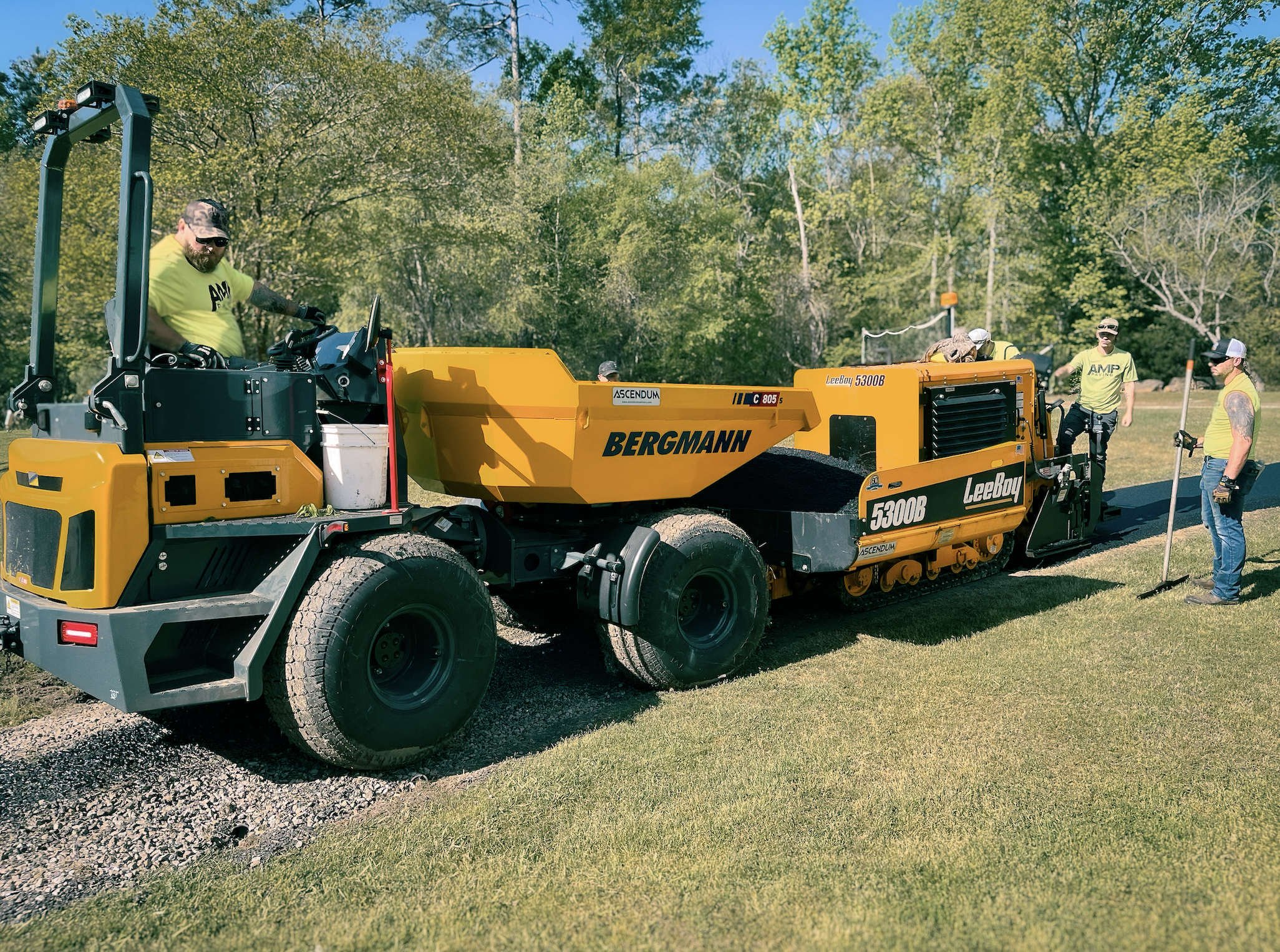
The C815s isn't trying to out-haul a large ADT. It doesn't need to. What it does is handle the material movement tasks that larger machines were never designed for: the last-mile runs, the tight corridors, the finished surfaces, and the soft ground conditions where heavier equipment can leave ruts and rework behind.
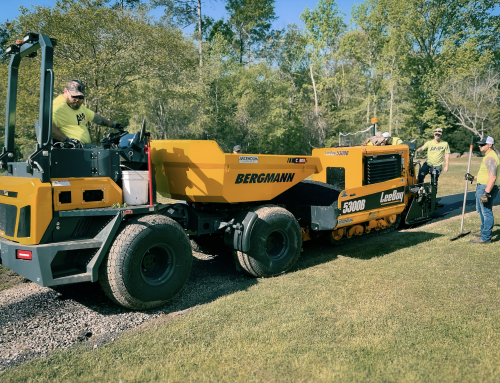
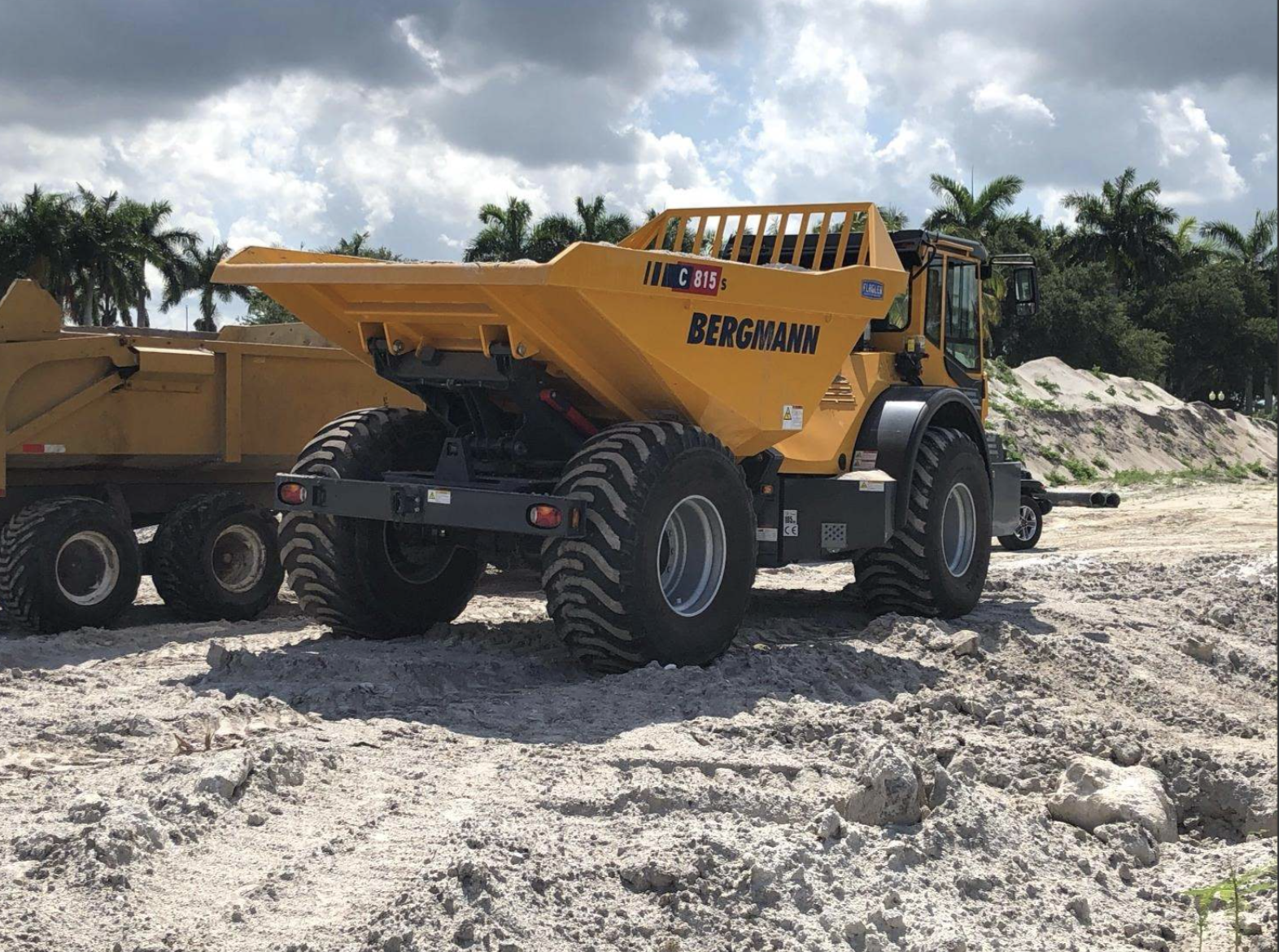
Put the Bergmann C815s alongside your fleet of articulated haul trucks, and each machine starts doing what it does best. The larger machines own the primary haul routes while the C815s, with a payload capacity of up to 26,455 lbs, articulated steering, and ground pressure as low as 10.9 psi, keeps material flowing everywhere else, to active work fronts, utility trenches, landscaped areas, and congested zones that might otherwise create bottlenecks.
The result isn't just more capacity. It's fewer crew delays, less surface damage, and a site that stays productive even as conditions change.
Where Articulated Dump Trucks Reach Their Limits
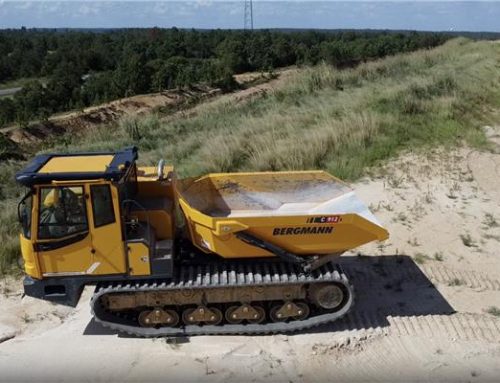
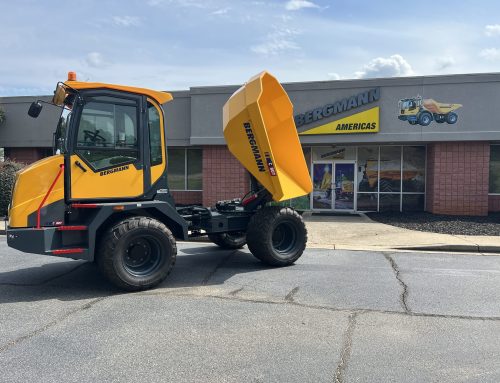
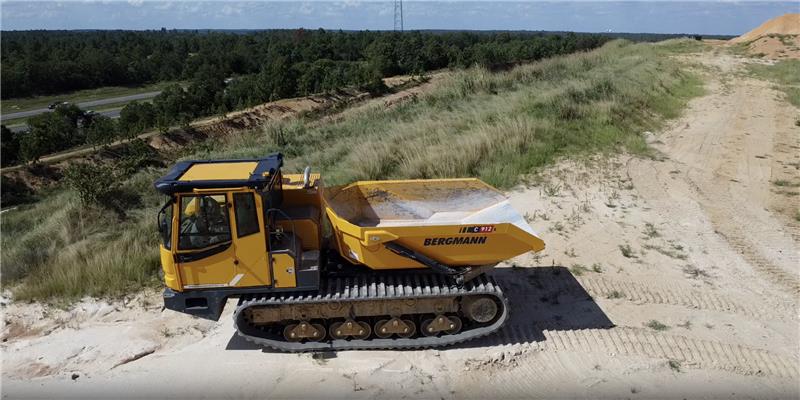
Low ground pressure. Compact footprint. Articulated steering. Depending on configuration, the C815s operates at ground pressure between 10.9 and 14.2 psi — light enough to cross finished grades, landscaping, and utility corridors without leaving the ruts a 40-ton ADT would.
These aren't just spec-sheet features. They're what allow the C815s to operate efficiently in the environments that quietly drain productivity on many jobsites.
Residential developments where crews need to move aggregate or topsoil without damaging freshly graded lots, sidewalks, or landscaping.
Urban infill projects where narrow access roads, neighboring buildings, and constant contractor traffic leave little room for larger articulated dump trucks to maneuver safely.
Utility installation projects where pipe, bedding material, and backfill must be transported through long, narrow corridors without creating unnecessary ground disturbance.
In these conditions, routing a large haul truck is both impractical and expensive.
The C815s can move material through these areas while minimizing the surface damage and rutting that often lead to costly restoration work.
A Fleet That Adapts as the Job Evolves
Jobsites don't stay static. Early in a project, large articulated dump trucks can move freely between stockpiles and work areas. As construction progresses, temporary haul roads disappear, structures go vertical, and multiple trades begin working in the same space. Access routes narrow, congestion builds, and moving large equipment becomes more challenging.
A fleet built entirely around large ADTs can lose flexibility as those conditions change. The machines that worked well during site preparation become less efficient when space is limited and crews are working in close proximity.
The C815s continues to perform as conditions tighten.
Adding the Bergmann C815s to your fleet doesn't replace your larger articulated dump trucks. It makes them more effective. By keeping high-capacity haulers focused on primary haul routes and assigning the C815s to tight access areas, finished surfaces, and changing jobsite conditions, contractors can keep crews supplied with material while reducing unnecessary equipment movement.
Adding another machine type does mean additional upfront investment and a learning curve for operators. For most contractors, that cost is offset over time by fewer crew delays, less surface restoration, and a site that keeps moving even as access tightens.
The Smarter Fleet Isn't Always the Biggest One
High-capacity hauling matters. Large ADTs are essential, and there's no substituting their payload on primary routes. But the most productive fleet on a modern jobsite isn't necessarily the one with the most horsepower. It's the one matched to the full range of demands the site creates. Matching each machine to the work it's designed to do improves jobsite efficiency, reduces unnecessary equipment movement, and helps crews stay productive throughout every phase of the project.
The real question isn't whether your ADTs can handle the job. It's how much time, surface damage, and rework you're absorbing every time they're sent somewhere they were never built to go. A second machine type doesn't complicate your fleet. It's what lets your primary haulers stay focused on the work only they can do.
If your crews are losing time waiting on access routes, or your finished surfaces are taking damage they shouldn't, that's usually a sign your fleet has a gap, not that your ADTs are falling short.
Learn more about the Bergmann C815s and how it can complement your articulated dump truck fleet.