
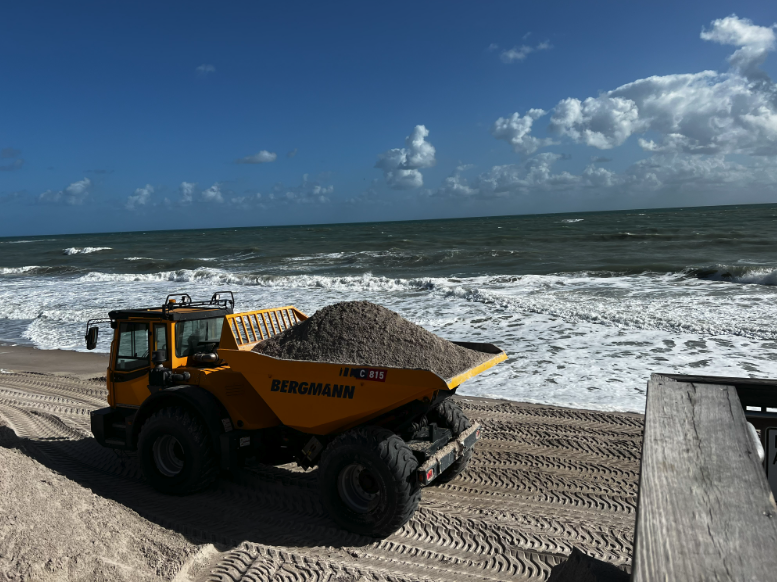
Sea Turtle Nesting Season: How Bergmann Dumpers Support Beach Reclamation Without Harming Nests
Every year, from March 1 through October 31, beaches along the coast become temporary homes for nesting sea turtles. These turtles come ashore under the cover of night to dig nests and bury their eggs, continuing a cycle that’s been part of coastal ecosystems for millions of years.
For beach maintenance crews and contractors, this same period often coincides with essential reclamation, erosion control, and restoration projects. The challenge: how to complete this critical work without disrupting one of nature’s most delicate events.
At Bergmann, we understand the importance of protecting wildlife while keeping vital beach maintenance projects on schedule.
Sea Turtle Nesting Season: A Delicate Balance
Seven species of sea turtles can be found in every ocean around the world. Among the most ancient creatures on earth, six of the seven species are threatened or endangered. Much of their struggle comes from human interference, bright lights, beach traffic, and, at times, heavy machinery operating too close to nesting zones.
When female turtles crawl ashore to lay their eggs, they rely on quiet, undisturbed beaches. Depending on the species and size of the turtle, a single nest can contain 80-180 eggs, incubating beneath the sand for roughly two months. Once they hatch, tiny turtles instinctively follow the moonlight toward the sea — a perilous journey where only about one in 1,000 to one in 10,000 survive to adulthood.
Beach reclamation and sand redistribution are vital for protecting coastal infrastructure and supporting tourism. But without the right precautions, machinery can compact sand over nests, destroy unmarked sites, or disorient hatchlings during their critical emergence phase.
Bergmann Machines in Turtle-Friendly Beach Work
Bergmann machines are engineered to support beach reclamation projects without harming turtle nests, even during the peak hatching months. Here’s how:
- Precision Handling: Bergmann dumpers feature responsive controls that allow operators to maneuver carefully around marked nest zones or sensitive dunes.
- Low Ground Pressure: All models distribute weight evenly to minimize surface compaction, reducing the risk of collapsing sand layers or harming buried nests.
- Visibility and Control: Ergonomic cab design and 360° visibility help operators spot flagged or protected nesting areas from the driver’s seat, improving on-site awareness.
- Adaptable Performance: From narrow beachfront paths to soft sand conditions, Bergmann’s articulated steering and traction systems allow for safe, steady movement where other machines might bog down — preventing unnecessary disruption or rerouting.
By combining these features with proactive measures, like mapping nests before work begins, Bergmann equipment helps communities balance beach maintenance with wildlife protection.
Best Practices for Working Around Nesting Sites
Whether you’re managing beach restoration, storm recovery, or coastal infrastructure work, following best practices helps ensure projects run smoothly — and sustainably.
- Identify Nesting Zones Early: Before starting a project, coordinate with local wildlife conservation groups or state environmental agencies to identify known or potential nesting areas. Many organizations provide updated maps of active nests.
- Establish Restricted Work Zones: Mark nesting sites with visible barriers and signage. These designated “no-go” areas should be clearly communicated to all operators before work begins.
- Adjust Timing and Workflows: When possible, schedule operations during daylight hours, when hatchlings are less likely to be moving toward the sea.
- Minimize Light Pollution: Artificial light can confuse hatchlings and draw them away from the ocean. Use shielded or red lighting near work areas, and limit nighttime operations in sensitive zones.
- Continuous Monitoring: Appoint an environmental monitor to oversee active machinery areas and provide real-time guidance to operators. Regular communication between crews and wildlife experts reduces the chance of accidental nest disturbance.
Working With Nature
Sea turtle nesting season is a reminder that our engineering and ethics must work hand in hand. With the right equipment, proper planning, and a commitment to environmental awareness, coastal maintenance doesn’t have to come at the expense of wildlife.
At Bergmann, we’re proud to be part of that balance, providing machines that help communities protect their beaches, support their ecosystems, and preserve the natural rhythm of the coast. Contact us to learn more.