
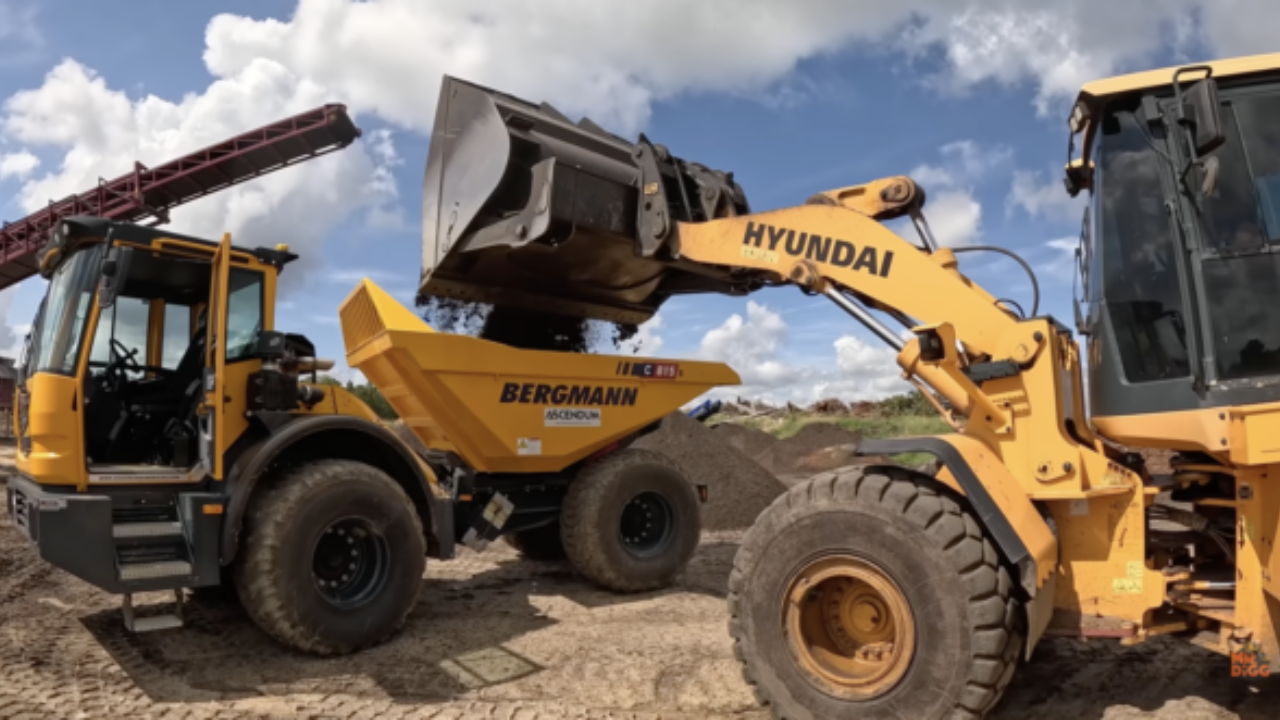
Maximizing Efficiency at Waste Management Sites: How the Bergmann C815s & C912s Deliver
Waste management sites are some of the toughest environments for equipment. Operators face constant challenges: uneven terrain, soft ground, tight maneuvering areas, long operating hours, and the need to transport heavy, bulky materials quickly and safely.
This is exactly where Bergmann dumpers, specifically the C815s and C912s, prove their value. Engineered for reliability and maneuverability, these machines bring the stability, capacity, and rugged build needed to keep waste-handling operations moving efficiently.
Understanding the Models: Key Specs for Waste-Site Performance
| Feature | Bergmann C815s | Bergmann C912s |
|---|---|---|
| Payload Capacity | 26,455 lbs | 22,046 lbs |
| Heaped Capacity | 10.5 yd³ | 8.5 yd³ |
| Engine Power | 159 HP | 241 HP |
| Top Speed | Up to 25 mph | Up to 10 mph |
| Dumping Options | Rear, 3-way, or swivel tip | Rear or swivel tip |
| Operator Comfort | Rotating seat (on 3-way model), comfort cab with heat and air, suspension axles, high visibility | Spacious Bergmann Comfort Cab, ergonomic, AC, suspension seat |
| Ideal Use Case | Heavier loads, high productivity, firm or soft ground | Soft ground, low-impact or sensitive terrains, short hauls |
After reviewing the core capabilities of each model, here’s how they translate to real-world waste-site operations.
Why Bergmann Dumpers Excel in Waste Management
Waste sites often have narrow lanes, dense debris fields, and limited turning space. The C815s, with its compact footprint and articulated steering, is built for agility. Operators can easily navigate winding paths, stack areas, or transfer zones without sacrificing payload capability.
The C912s, while larger, still prioritizes maneuverability. Its balanced chassis design allows smooth operation, even when carrying full loads across uneven or inconsistent surfaces.
How the Bergmann C815s & C912s Meet These Demands
Waste‑management operations present a distinctive set of challenges:
- Variable terrain: from paved transfer station yards to gravel lots, to landfill slopes and soft cells.
- High‑cycle loads: frequent loading/unloading, tight turns, compact sites.
- Machine uptime & durability: the equipment must keep moving, often under harsh conditions (debris, uneven ground).
- Dumping flexibility: transfer stations may require side dumps, rear dumps, or three‑way dumps for versatility
- Cost control & efficiency: fuel usage, maintenance costs, and machine versatility all impact bottom line.
Here’s How The Models Align With These Demands:
1. Stability and Traction on Soft or Unpredictable Ground
Landfills and waste-processing sites are rarely consistent underfoot. Fresh cover soil, compacted cells, rain-soaked surfaces, and debris piles can change traction from hour to hour.
Both the C815s and C912s are designed with:
- Optimized weight distribution for stability
- High ground clearance
- Excellent traction, even when fully loaded
This allows operators to move confidently across areas where wheel loaders or larger trucks may struggle or sink.
2. High Productivity in Tight, Congested Work Zones
Waste operations rarely offer open, free-flowing travel paths. Equipment must maneuver around pits, piles, bins, and other machines.
Bergmann dumpers support high productivity through:
- Articulated steering for tight turns
- Fast cycle times between loading and dumping
- Compact dimensions that fit in recycling yards, landfill tipping floors, and transfer-station bays
The result: smoother material flow with fewer bottlenecks.
3. Versatile Dumping Options for Multiple Material-Handling Needs
The C815s, available in rear, three-way, or swivel-tip configurations, provides the flexibility needed when:
- Feeding material into sorting lines
- Dumping into bunkers or against walls
- Side-tipping into narrow containment areas
- Discharging loads in constrained spaces
The C912s offers similar dumping flexibility with a low-impact footprint ideal for soft ground, landfill cover, or environmentally sensitive areas.
4. Operator Comfort That Directly Impacts Productivity
Waste-management shifts can be long, and operators often deal with dust, noise, vibration, and extreme weather.
Bergmann’s operator-first design helps reduce fatigue and improve precision:
- Climate-controlled comfort cabs
- Rotating seats (on the C815s 3-way model) for visibility and safer dumps
- Suspension seating and axle options for smoother travel
- Intuitive controls that shorten training time
Comfort translates into better performance, fewer mistakes, and safer operation.
5. Lower Daily Operating Costs Through Smart Design
Every waste site pushes for efficiency and cost control. Bergmann dumpers help by focusing on:
- Fuel-efficient engines
- Simplified daily service checks
- Easy access to filters, fluids, and maintenance points
- Durable components designed for abrasive, demanding environments
Less downtime equals more productive hauling cycles.
Low Ground Pressure for Challenging Terrain
Landfills and other waste-site operations often involve sensitive or soft surfaces, including recently covered cells, slopes, and uneven terrain. This is where Bergmann dumpers, particularly the C912s, truly stand out.
Why low ground pressure matters:
- Slope-surfaced operation: Landfills often feature extreme gradients. The C912s’ low ground pressure and balanced chassis allow operators to safely and efficiently navigate sloped surfaces without risk of sinking or destabilizing loads.
- Maneuverability in tight spaces: Even on soft ground, the C912s maintains exceptional maneuverability, allowing crews to operate efficiently in congested areas where other carriers or dumpers might struggle.
- Optimized for short hauls: The agility of the C912s makes it ideal for repeated short-distance transfers across soft or sensitive surfaces, minimizing surface disruption while maintaining productivity.
By emphasizing low-impact operation, Bergmann ensures that landfill maintenance and soil-cover projects can proceed safely, efficiently, and with minimal ground disturbance, helping fleets meet both operational and environmental goals.
Recommended Use Cases in Waste-Management Operations
Here are specific scenarios where each machine shines:
- Transfer Station Yard (solid ground, high cycles) – C815s
-
- Frequent drop‑offs/loads on flat paved or compacted surface
- Need for quick cycles and tight maneuvering
- The three‑way tip enables side‑dumping into bunkers or containers without repositioning the machine.
- Landfill Cell Development / Soil Cover Operations – C912s
-
- Soft surfaces, slopes, debris, and challenging ground conditions
- The tracked design performs best when mobility on unstable or soft terrain is essential
- Sorting Facility / Recycling Yard – Could use either, depending on surface condition
-
- If the yard is paved/firm, go with C815s for speed and turn radius.
- If the yard is more open/ungraded or has soft sections, the C912s mitigates the risk of getting stuck.
- Storm Debris Clean‑Up / Emergency Waste Mobilization – C912s
-
- The versatility, low ground pressure and tracked mobility mean you can access remote or unstable locations.
Why Bergmann Americas Is a Strong Partner for Waste Management Fleets
For waste‑management and recycling site operators looking to maximize material‑moving productivity while managing cost and complexity, the Bergmann C815s and C912s deliver. By aligning machine type (wheeled vs tracked) to specific ground conditions and leveraging each model’s tipping versatility, stability, and rugged build, fleets can see measurable gains in output, reduced downtime, and safer daily operations.
Want to see these machines in action at a waste management site? Check out: @TheRealMrDiGG YouTube channel to see more!